Iranian Jews constitute one of the world’s most ancient Jewish communities. Their history dates to the Persian Empire in the 6th century BCE, making this historical presence a significant part of not only Iran but also the Jewish diaspora. This community, which has sustained its life on Iranian soil for centuries, has participated in various migration movements at different times, influenced by political and societal changes.
This study aims to examine topics such as the historical migration processes, demographic characteristics, identity formation, and socio-political approaches of Iranian Jews living in Israel. In doing so, it will both illuminate a societal dimension of Iran-Israel relations and investigate the cultural continuity of the diaspora.
Demographic Structure of Iranian Jews
The community of Iranian-origin Jews and their descendants who live in Israel, forming an integral and active part of the country’s general population, constitute this group. While the phrase “Iranian Jewish Community in Israel” is useful, it is an ethnocultural and demographic concept that is excessively broad and flexibly defined. This nomenclature actually encompasses Farsi and Neo-Aramaic-speaking Jews who come from a diverse array of distinct urban, provincial, and rural communities in different regions of Iran.[1]
Today, it is estimated that approximately 200,000 to 250,000 Iranian Jews reside in Israel. Although this community lives outside Iran, they are still tightly bound to their Iranian identity. So much so that the group most affected by the tensions between Israel and Iran is undoubtedly Iranian Jews in Israel. Members of the community frequently use the phrase, “We are Israeli, but we are still Iranian,” which demonstrates the dilemma they face.
Iranian Jews migrated to Israel en masse after Israel declared its independence in 1948. However, as will be discussed in detail later in the study, this was not the first migration wave. The migration movement that began in the 1880s is still ongoing. The migrating Iranian Jews primarily settled in the regions of Jerusalem, Tel Aviv, Holon, Bat Yam, Rishon LeZion, Kfar Saba, Ness Ziona, and Rehovot. Additionally, there is a segment residing in Netanya, Haifa, Ashkelon, Ashdod, and Beersheba.
Within the framework of its immigrant settlement policy, the Tel Aviv administration placed some of the Persian Jews in moshavim (cooperative agricultural settlements). With this policy, many moshavim were established with the participation of Iranian Jews, including Agur, Amishav (now a neighborhood of Petah Tikva), Avdon, Dovev, Eshbol, Givati, Givolim, Hodayah, Margaliyyot, Maslul, Melilot, Nes Harim, Netiv HaShayarah, Neve Yamin, Nogah, Pa’amei Tashaz, Patish, Kadimah, Talmei Bilu, and Zarfah. These settlements not only met the housing needs of the immigrants but were also a reflection of Israel’s policies for rural development and balancing regional population distribution. Therefore, these moshavim can be regarded as the concrete manifestation of the Iranian Jews’ integration process into Israeli society and the country’s nation-building policies.
Migration of Iranian Jews to Israel
The migration of Iranian Jews to Israel is a multifaceted phenomenon shaped by various historical and political processes. This migration movement is directly linked both to the establishment of Israel and its state policies and to socio-political transformations in Iran. Many Iranian Jews have migrated from Iran to Israel during various periods of history.
It is claimed that the first migration movements were pioneered by Iraqi Jews from the North in 1812. While the scope of this migration was limited, it is stated that a small number of Iranian Jews participated.[2]
The first Iranian Jewish community to travel to Israel set out from Shiraz with a caravan in 1815. This caravan first arrived at the port of Bushehr and crossed to Basra by ship. Part of the community that reached Damascus by land from Basra remained there, while the rest arrived in Safed and Jerusalem. The Jewish community that reached these two cities formed the nucleus of the Iranian Jewish Community in the region. Another route used by the early Iranian Jewish immigrants for migration was Egypt. This group traveled via Bushehr to Port Said in Egypt, and from there they crossed the Northern Sinai Desert with caravans to reach Jerusalem. Both journeys lasted for months and involved various dangers. After the declaration published by Harun Hokhohi in Shiraz in 1891, the number of Iranian Jewish immigrants continued to increase throughout the 19th century.[3] By 1892, the number of Shiraz Persian immigrants in Jerusalem had reached one thousand.[4] In the thirty years between 1919 and 1948, 3,536 Iranian Jews migrated to Palestine. However, these migrations appear to have been individual movements. When compared with the migrations during the period of Israel’s declaration of independence, as will be discussed later, the number is revealed to be quite limited.
On the other hand, a systematic organization emerged among the Jewish communities in Iran. Between 1880 and 1917 (and largely until the establishment of Israel), the social life and internal organization of Iranian immigrants were primarily structured around synagogues and their affiliated institutions. Between 1894 and 1913, the immigrants built six synagogues in their neighborhoods in Jerusalem. These synagogues, led by Farsi-speaking rabbis, were supported by volunteer officials, and financial needs were largely met by wealthy Iranian donors in Jerusalem and Jewish communities in Iran. Despite limited resources and little support from local Jewish institutions and authorities, these synagogues endeavored to meet the immigrants’ diverse needs in the religious, educational, and social service sectors. [5]In 1900, a welfare and educational institution called the “Lovers of Zion Association” was founded by Farsi-speaking Jews in Jerusalem.[6] By 1906, two traditional religious schools for Farsi-speaking children were opened, and from 1907 onwards, approximately 80 children were enrolled in these schools. Furthermore, the “Peace and Brotherhood Society” was established during this period by the younger generations of immigrants from Bushehr origin to provide educational and social support to the community.[7]
With the British occupation of Iran in 1917, the Jewish minority was taken under protection. In the context of the rise of Zionism, the role of Jews in Iran gradually increased. During this period, an organization called “Preserving the Languages of the Past,” which solely carried out Zionist activities, was established. In 1918, the Zionist Union of Iranian Jews was founded, with branches opened in other Iranian cities. In 1919, the first Zionist Congress of Iranian Jews was held in Tehran. All Zionist organizations in the country participated in this congress, which was chaired by Azizollah Naim. The Zionist movement in Iran encouraged the establishment of active Zionist associations among the youth of the Jewish minority. These associations engaged in activities such as collecting donations, aiding Zionist institutions for the purchase of Palestinian land, promoting the Hebrew language and literature, and publishing educational magazines and periodicals.[8] In line with this, a Farsi magazine called “Hajeulah” (Salvation) was published. Moreover, important books for Hebrew language instruction were printed in Tehran in 1918. Another Jewish magazine called “Sinai,” the publication organ of the Zionist movement in Tehran, was published, and the first Zionist union was established in the city. In 1914, the “Hebrew Teaching Society” was founded in Hamadan and the first Zionist association in Iran began its activity in the same year. Also, during this period, a Zionist newspaper called “Shalom” published in both Farsi and Hebrew, began its publication life.[9]
Following the announcement of the Balfour Declaration in 1917, Ottoman rule in Palestine ended, and the British Mandate was established in the region. After this process, the activities of Jewish institutions in the region increased, and their initiatives gained pace. This change in the region accelerated Jewish migration from Iran to the Palestine region. According to official figures published by the Israeli Central Bureau of Statistics in 1949, approximately 3,632 Jews migrated from Iran to Palestine between 1917 and 1948.
The other major wave of migration to Israel occurred around May 14, 1948, when Israel declared its independence. After this period, Iranian Jews developed great sympathy for Israel. Anti-Semitic propaganda in Iran was among the leading factors influencing this sentiment.[10] Although the Shah of Iran, Mohammad Reza Pahlavi, unofficially recognized Israel in 1951, he defended the Palestinian cause and banned Zionist activities in the country. Furthermore, the Tehran administration forced Iranian Jews to declare their anti-Zionist views and officially reject any Zionist activity in the country. However, members of the Jewish community in Iran refused to take any position on this matter and chose to remain silent. In 1950, the migration wave among Iranian Jews accelerated. This migration process took place in two flows: one officially supported through Israel’s Jewish Agency and the other migrating to Israel through unofficial means. Both flows were facilitated by Mossad Le’Aliyah Bet and other major Jewish organizations. In summary, with the establishment of Israel in 1948, more than 40,000 Jews migrated from Iran to Israel.
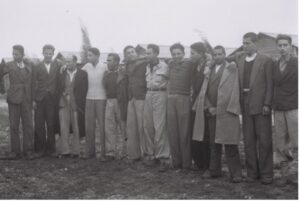
Jewish migration from Iran to Israel slowed considerably after 1953. Consequently, the Jewish Agency and the JDC aimed to strengthen the identity and attachment to Israel of the younger generations by investing in Jewish schools in Iran. However, during this period, the Iranian Jewish community had a social structure closer to that of Western communities compared to other Jewish communities in the Middle East. For this reason, although the goal was to strengthen Zionist identity through education, tensions arose between local community leaders and Israeli institutions.[11]
During the 1960s and 1970s, the migration wave slowed due to the good relations between Iranian Jews and the Shah Pahlavi. Indeed, the prosperity level of many Jews in Iran increased during this period. Four thousand Jewish students were studying in Iranian universities. In summary, Iranian Jews lived in prosperity in the country during the final period of the Shah.
Following the 1979 Iranian Islamic Revolution, the wave of migration from Iran to Israel increased. During this process, anti-Zionism rhetoric gained prominence in Iranian foreign policy. The increasing anti-Zionism discourse in Iran subjected the Jews in the country to unprecedented pressure. Within this period, the Jewish emigration from Iran to Israel significantly increased. The group that left Iran, in particular, consisted of businessmen and merchants who had established commercial ties with Israel during the Shah’s era. They feared potential retaliation from the new government.[12]
Mutual interests between Iran and Israel allowed for covert collaborations that continued into the 1980s. While Israel provided military equipment to Iran, the Khomeini administration permitted Jews to emigrate to Israel and the US. This cooperation was based on pragmatic and temporary interests; it did not alter the fact that Iran’s official policies toward its Jewish minority continued along an axis of hostility.[13]
The Sociological Structure of Iranian Jews in Israel
The Persian Jews living in Israel are the migrant generations of the Iranian Jewish community, which possesses a deeply rooted historical, cultural, and religious heritage. This group, which migrated from Iran to Israel with the waves of Aliyah starting after 1948, stands out as a significant factor shaping both the ethnic diversity of Israel and the social structure of the Jewish diaspora. The sociological structure of Iranian Jews in Israel can be analyzed through their pre-migration social status in Iran, religious practices, economic activities, and linguistic identities, alongside their adaptation processes to Israel, forms of social solidarity, and mechanisms of cultural transmission.
Iranian Jews, like other Mizrahi groups, have occasionally encountered a negative image in Israel; specifically, the emigration of only a fraction of the wealthy and educated segment strengthened the perception that the majority of immigrants had a lower socioeconomic status. The fact that the majority of newcomers were engaged in free trade was a factor reinforcing this perception. The hostile approach of Iran towards Israel after the 1979 Islamic Revolution further intensified negative attitudes towards Iranian Jews. From a linguistic perspective, Iranian Jews used standard Farsi for communication with non-Jews, while they developed their own unique dialects in provincial cities. These dialects contain Hebrew and Aramaic elements and are mostly mutually unintelligible; furthermore, a secret jargon called Loterā’i, which combines Hebrew and Aramaic words with Farsi morphology, was used for commercial and security purposes. This linguistic diversity distinguished Iranian Jews from other Mizrahi communities, which shared the Arabic language, making it necessary for immigrants to first learn Hebrew to communicate with other communities.[14]
The migration of Iranian Jews to Israel in the 1950s also presented difficulties in terms of integration due to cultural and social differences. Representatives of the Jewish Agency noted that these immigrants had limited work skills and lacked Jewish cultural awareness, isolating them from other Israeli groups. Ashkenazi Jews explained these differences through traits such as “anti-social” behavior and laziness, interpreting the Iranian Jews’ difficulties in adapting to Israeli society in this context.[15]
The migration of Iranian Jews to Israel, especially between 1948 and 1960, occurred largely with masses coming from provincial and rural areas who lacked modern education, professional skills, and economic capital. This situation made their adaptation to Israel’s rapid modernization process difficult, positioning most of them as low-skilled labor in infrastructure, agriculture, and industry projects. A significant portion of the immigrants were settled in temporary camps and development towns, while subsequent generations moved toward the vicinities of large cities. Over time, Iranian Jews concentrated in small and medium-sized commercial enterprises and made marked progress in education and professional qualifications. Despite this, differences in educational, professional, and political representation compared to Western-origin Jews have persisted.[16]

Nevertheless, second and third-generation Iranian Jews have produced highly educated doctors, engineers, and academics; some have also reached high-level positions in politics, the military and religious leadership. Figures such as President Moshe Katsav, Defense Minister Shaul Mofaz, Chief of General Staff Dan Halutz, and Air Force Commander Eitan Ben Eliyahu are symbolic examples of this ascent. Furthermore, figures like chief rabbi Eliyahu Bakshi Doron, academic Ezra Zion Melammed, artist Rita, and author Dorit Rabinyan reflect the significant contributions of Iranian-origin Jews to Israel’s social, cultural, and intellectual life.[17]
Today, it can be said that Iranian Jews have still not fully adapted to Israel. Many feel a strong bond to their Iranian identity, cultural heritage, and more. Even after years since leaving their homeland, they continue to maintain their Iranian identity. Today, they sustain their presence in the area known as “Little Persia” in South Tel Aviv, with restaurants that reflect Iranian culture. This area is a location with Farsi restaurants, featuring spices and products imported from Iran. They continue to try to keep Iranian cuisine and culture alive in this district. Moreover, despite living in Israel, this population continues to speak Farsi and celebrate Iranian holidays.
Iranian Jews in Israel still maintain their ties to Iran. Many still communicate with their relatives in Iran via social media and various communication tools and they closely follow events taking place in Iran. They even demonstrated a reaction during the protest actions that occurred in the aftermath of the Mahsa Amini incidents in Iran in 2022. This community organized rallies to support the movements led by women. The slogan “Zan, Zendegi, Azadi” (Woman, Life, Freedom) was prominent during the demonstrations, and criticisms were voiced against the regime that had been suppressing social segments in Iran for many years. The actions carried out in Tel Aviv and Jerusalem in early October received extensive media coverage; the Tel Aviv City Hall was illuminated with the aforementioned slogan. Female demonstrators cut their hair in solidarity with women in different cities of Iran, and on October 29, they held a large meeting in Rabin Square in Tel Aviv to commemorate the fortieth day of Mahsa Amini’s death. These developments are noteworthy as they show the Iranian-origin community in Israel maintains strong identifying and emotional ties with the events in Iran.[18]
Iranian-origin Jews broadcast current events happening in Iran via a radio station in Tel Aviv called “Radison”. Radison broadcasts in Farsi 24 hours a day, producing content related to Iranian poetry, music, and politics. The radio states its mission as continuing the peaceful relations between the peoples of Iran and Israel, which enjoyed friendly relations before the Islamic regime.
Political Leanings of Iranian Jews in Israel
It is quite difficult to determine the political leanings of Iranian Jews in Israel. This is because there are few specific academic studies or surveys available on this subject in Israel. However, interviews conducted with Iranian Jews in the country figures who have reached the level of state administration and news content published in the Israeli press can offer insights.
Iranian Jews, who hold a significant demographic place in Israel, are also of great importance in terms of their political influence. At this point, the factors determining the stance of Iranian Jews are identity, belonging, and security policies.
Iranian Jews in Israel appear to tend to vote mostly for the Center-Right Likud Party. [19]The reason for this stems from the fact that the majority come from conservative religious backgrounds and maintain their conservative leanings both politically and religiously. This situation has strengthened support, particularly for Netanyahu and the Likud Party, who adopt a hard-line stance against Iran. Indeed, it is stated that Iranian Jews have mostly voted for Likud in the last three decades. In the Israeli public sphere, even in everyday spaces like marketplaces, broad opposition is observed against any nuclear agreement with Iran. Concerns are not limited solely to the possibility of Iran developing nuclear weapons; worries are also expressed that the agreement will lead to the lifting of economic sanctions, thereby strengthening Iran. Furthermore, Iranian Jews appear to have opposed Netanyahu’s initial attempt to form a coalition for military intervention against Iran. This can be interpreted as Iranian Jews supporting Netanyahu and his party for reasons other than military intervention.[20]
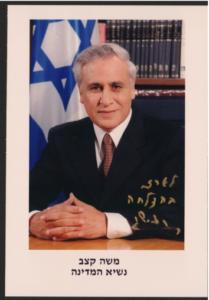
Alongside this, Iranian Jews are also seen to be active in the Israeli political arena. Former Israeli President Moshe Katsav became Israel’s first president of Mizrahi descent. Moreover, he is of Iranian origin and was among the mass that migrated after 1948. It is also noted that Katsav was Likud-affiliated and entered the Israeli parliament as a member of the Knesset for Likud in the 1977 elections.
Another Iranian Jewish figure who played an active role in Israeli politics is Shaul Mofaz. Mofaz served as the Chief of General Staff of Israel and later entered the political scene with the Likud Party. Mofaz even ran for the party leadership against Netanyahu within the Likud Party but withdrew his candidacy. Furthermore, he separated from the Likud Party and joined Kadima.
Even today, there are figures in the Israeli Parliament who have served as members of Knesset and as ministers. Galit Distel-Atbaryan is one of these prominent names. Atbaryan, like the others, served as a member of the Knesset and as Minister of Information for the Likud Party. Atbaryan’s views on the Palestinian issue are quite rigid. She has stated that Gaza should be “wiped off the map.”
It is emphasized that Iranian Jews gravitate toward right/center-right parties, especially Likud, primarily due to security concerns, nationalist rhetoric, and the search for social integration. Nevertheless, heterogeneity is observed depending on differences in generation, education, and area of residence; a tendency toward center and liberal parties is particularly notable among the urban and educated younger generations. On the identity plane, Iranian Jews position themselves through both the socio-cultural schisms brought by the Mizrahi minority experience in Israel and the political sensibilities shaped by their Iranian past, leading them to adopt a cautious approach to policies concerning Iran-Israel relations. This community is represented in Israeli politics through politicians like Shaul Mofaz and Mordechai Zar in the past, and currently through figures such as Galit Distel-Atbaryan, Osher Shekalim, and Meirav Ben-Ari. Ultimately, many names actively serving in the Likud Party and entering parliament among Iranian Jews can be listed today.
Organizations of Iranian Jews in Israel
The mass migration of Iranian Jews to Israel increased after 1948 and particularly with the 1979 revolution; from the beginning of the migration process, the community organized around synagogues and later diversified into the form of non-governmental organizations (NGOs) or civil society organizations. This historical background forms the foundation of the current organizational structure.
One of the community’s oldest and best-known organizations is the Central Organization of Iranian Immigrants in Israel. The institution aims to facilitate the adaptation of Jews who migrated from Iran to Israel. To this end, it guides newcomers, provides housing assistance, scholarship aid for students and community solidarity events. Furthermore, its mission includes preserving the Iranian Jewish cultural heritage, keeping Farsi traditions alive, organizing cultural events, and maintaining the memory of the community’s past.
Another NGO established by Iranian Jews in Israel is the Merage/ Iranian Community Program. Like the Central Organization of Iranian Immigrants, this organization has taken on the mission of accelerating the integration of Jews who migrated from Iran to Israel. Merage was founded in 1998 by David and Laura Merage. Merage provides employment, scholarships, job placement, and opportunities for social participation for Iranian Jews. Moreover, the foundation has supported young Iranian Jews in their mandatory military service, access to employment opportunities, and the realization of their own business ventures. Over time, this program expanded, transforming into a unique institutional framework focused on empowering Iranian women in Israel, encompassing nine women’s clubs nationwide.[21]
The Maccabee Foundation, established in 1995, also stands out as a foundation that provides scholarships to Iranian Jewish students in Israel. The foundation not only grants scholarships to students but also preserves the Iranian Jewish heritage, supporting Iranian studies, along with the history, literature, and cultural research of Iranian Jewry.
The Stance of Persian Jews in Israel in the Context of the Iran-Israel Conflict
The twelve-day conflict between Iran and Israel, which occurred on June 13 and ended on June 24, has gone down in history as the “12-Day War”. The stance of Persian Jews residing in Israel is undoubtedly of great importance in this conflict. This is because Iranian Jews in Israel have been the most apprehensive during the long-standing tension between the two states. In this regard, sources concerning the attitudes of this community during the aforementioned war are quite limited. During this process, Iranian Jews in Israel, while sharing the state’s security concerns as Israeli citizens, also tend to cautiously follow the potential moves of the Iranian regime due to their Iranian-origin background. Statements in the Times of Israel reveal that there was no expectation of direct “exceptional pressure” within the community, but members were concerned about possible retaliation that their family members and relatives living in Iran might face.
On the other hand, Iranian Jews living in Israel have developed an empathetic consciousness toward the Jewish community under the pressure of the conflict in Iran and act accordingly. It is frequently observed that messages of solidarity with Jews in Iran are expressed through media outlets, diaspora organizations, and social media platforms. For some, the prevailing approach is that this period is a “time of tension” and that caution should be exercised in daily communication and religious practices. A tendency to maintain a “strategy of silence” and a low profile is observed, rather than openly taking a political side.
Persian Jews living in Israel, while closely following the ongoing conflict, have behaved more cautiously rather than taking open political positions. To this end, they have preferred to remain silent. The reason for this could be both the expectation of national unity from Israeli society during this process and the security sensitivities regarding their family and kinship ties in Iran. Additionally, some Israeli press sources reflected that Jews in Israel experienced a double anxiety during the conflict. The first of these anxieties relates to the safety of their families living in Iran; it is claimed that the Tehran administration exerted pressure on Jews in the country during this process. The second anxiety concerns the safety of Israel, the country where they live. This situation also demonstrates the identity dilemma faced by Iranian Jews in Israel.[22] Indeed, various reports published in the last decade show that a significant portion of Iranian Jews living in Israel supports military intervention against Iran. On the other hand, there is no extensive media coverage in Israel during the conflict, highlighting Iranian Jews as a distinct group.
Another foundation established by Iranian Jews to preserve their cultural identity and promote social welfare is the House of Khoresh (Kuruş Evi). The foundation aims to strengthen the ethnic identity of Iranian Jews and reinforce the bond within the community. In this context, it organizes various events. Prominent among these events are concerts and ceremonies.[23]
Conclusion
Iranian Jews in Israel exhibit a unique and multifaceted communal identity, linked to both Israeli and Iranian societies through their historical origins, cultural heritage, and diaspora experiences. The mass migrations that occurred after 1948, particularly following the 1979 Iranian Islamic Revolution, led to significant socio-economic and cultural challenges during the community’s integration process into Israel; the lack of education, professional skills, and economic capital among the immigrants made adaptation difficult for the first generation. However, the second and third generations of Iranian-origin Jews have achieved remarkable visibility in fields such as education, politics, economy, culture, and art, gaining an influential position in Israeli society. Through these successes, they have both contributed to the national structure and demonstrated their capacity to maintain their Iranian identity.
The political attitudes of the community are shaped by security concerns, nationalist tendencies, and experiences carried over from their Iranian past; their Mizrahi identity and Iranian origins, in particular, explain their inclination toward right and center-right parties, especially Likud. At the same time, a trend towards more liberal and center parties is observed among the young and educated generations, presenting a heterogeneous political profile within the community. In the cultural sphere, Iranian Jews preserve the Farsi language, traditions and holidays through synagogues, associations and foundations, strengthening social solidarity and ensuring the continuity of their diaspora identity.
The position of Iranian Jews in Israel becomes particularly pronounced during times of crisis, in the context of their transnational belongings and diaspora identities. Especially during periods of heightened Iran-Israel tension, the community both observes the security concerns of the Israeli state and displays an empathetic sensitivity through their relatives and cultural ties in Iran. This dual position reveals the community’s identity dilemmas, allowing them to be evaluated as an example of a diaspora that can simultaneously maintain both its national and cultural identities.
In conclusion, Iranian Jews in Israel continue their existence as a distinct diaspora community that has gained an effective place in Israeli society through their social, political, and cultural contributions, embracing national citizenship while preserving their Iranian cultural heritage. This community represents a multi-dimensional example of diasporic identity, functioning both as an integrated Israeli group and as a community that transmits its deeply rooted ethnic and cultural heritage.
Footnotes:
[1] David Yeroushalmi, “Israel ii. Jewish Persian Community”, Encyclopadia Iranica, 16, 2.
[2] Me’mun Kewaan, İran Yahudileri çev. Şahin Bal, (Mana Yayınları, 2017), 72.
[3] Kewaan, İran Yahudileri, 72.
[4] Raphael Patai, Jadid Al-Islam: The Jewish “New Muslims” of Meshhed (Wayne State Univerwsity Press,1997), 86.
[5] Yeroushalmi, “Israel ii. Jewish Persian Community”.
[6] Yeroushalmi, “Israel ii. Jewish Persian Community”.
[7] Yeroushalmi, “Israel ii. Jewish Persian Community”.
[8] Husam Kassai Hussein ve Wedad Abdolrahman al-Karni, “The Iranian Revolution and the Reality of Jews in Iran After 1979,” Journal for Iranian Studies 7, no. 17 (2023): 21.
[9] Hussein ve al-Karni, “The Iranian Revolution and the Reality of Jews in Iran After 1979,” 21.
[10] Alessandra Cecolin, “Iranian Jewish Aliyah in 1951: An Historical Analysis of Iranian Jewish Emigration to Israel,” Studies in Ethnicity and Nationalism 18, no. 3 (2018): 224-226.
[11] Lior B. Sternfeld, Between Iran and Zion: Jewish Histories of Twentieth-Century Iran Account (Stanford University Press, 2018), 80-81.
[12] Hussein ve al-Karni, “The Iranian Revolution and the Reality of Jews in Iran After 1979,” 22.
[13] Hussein ve al-Karni, “The Iranian Revolution and the Reality of Jews in Iran After 1979,” 23-24.
[14] Michal Tannenbaum ve Galit Peleg, “Language and Identity among Iranian Immigrants in Israel,” Journal of Multilingual and Multicultural Development 41, no. 9 (2020): 765-766.
[15] Alessandra Cecolin, “The Power of Silence: rethinking Iranian Jews’ Power Relations During the Qajar Dynasty,” British Journal of Middle Eastern Studies 51, no. 1 (2024): 25-27.
[16] Yeroushalmi, “Israel ii. Jewish Persian Community”.
[17] Yeroushalmi, “Israel ii. Jewish Persian Community”.
[18] Sternfeld, Between Iran and Zion.
[19] Michal Shamir ve Asher Arian, “Collective Identity and Electoral Competition in Israel,” American Political Science Review 93, no. 2 (1999): 265–270.
[20] Sternfeld, Between Iran and Zion.
[21] Zev Stub, a.g.h.
[22] Sternfeld, Between Iran and Zion.
[23] Rachel Sharaby , “Cultural Syncretism in Definitional Ceremonies of Iranian Immigrants,” Advances in Anthropologys 12 (2022): 112-113.
This article was first published on the Türkiye Research Foundation’s Turkish website on 20.11.2025.