Unmanned aerial vehicles (UAVs) are among the technological advancements that have fundamentally transformed the nature of military operations over the past two decades. Initially used for reconnaissance and surveillance missions, these systems have evolved into armed platforms and become a cornerstone of modern warfare. Thanks to advancements in sensor technology, satellite navigation systems, and AI-supported control algorithms particularly since the 2010s the military capabilities of UAVs have significantly increased.
One of the most striking aspects of this transformation is the so-called “loitering munitions,” or kamikaze unmanned aerial vehicles. Equipped with high-resolution electro-optical and infrared cameras that enable easy transport, target detection, surveillance and guidance toward the target, these systems are attack platforms capable of circling over the target area for a specific period to identify a suitable target and then destroying it by crashing into the target either upon operator command or autonomously. The most significant feature of these systems is the flexibility they provide in decision-making regarding the target. While traditional cruise missiles are directed to pre-determined target coordinates prior to launch, kamikaze UAVs can remain in the target area for a certain period of time and carry out an attack when a suitable target appears.
From the perspective of modern military doctrine, kamikaze UAV systems offer three key advantages on the battlefield. First, these systems are cost-effective. While traditional guided munition systems are quite expensive, these systems can be produced at a relatively low cost. This represents a significant advantage, particularly in asymmetric warfare strategies.
Second, kamikaze UAV systems offer operational flexibility. Since these systems can remain in the target area for a certain period of time, they can be more effective against moving targets. The successful attacks carried out by Azerbaijani forces using Harop systems procured from Israel against moving Armenian military convoys during the Nagorno-Karabakh War (2020) between Azerbaijan and Armenia are the most recent concrete example of this.
The third is its swarm attack capability. The simultaneous deployment of a large number of kamikaze UAVs can overwhelm air defense systems. This poses a significant challenge for modern air defense systems.
Due to these characteristics, kamikaze UAV systems are playing an increasingly important role in modern warfare. Particularly for medium-sized states and non-state actors, these systems are viewed as an effective counterbalance against adversaries with advanced air forces. However, faced with the lengthy production times and rising costs associated with high-tech weapon systems, the world’s leading militaries have also begun to adopt this technology. A prime example is the LUCAS system, which the US reverse-engineered from Iran’s Shahed UAVs and subsequently deployed against Iran.
A Process That Began with the DAR Project and Matured with Harpy
In recent years, the widespread use of kamikaze UAV systems in military operations has heightened the strategic importance of this technology. Current examples such as their particularly intensive use in the Russia-Ukraine War, followed by the 12-Day War between Iran and Israel in June 2025, and the ongoing conflict between the US, Israel, and Iran demonstrate that kamikaze UAVs play a vital role in modern combat.
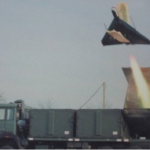
In fact, the first modern example of kamikaze UAVs, an innovative warfare technology whose effects we now see on the battlefield, emerged 40 years ago. In the mid-1980s, Germany and the US launched a project called Die Drohne Antiradar (DAR) to develop a system capable of targeting Soviet radars and suppressing enemy air defenses using a “fire-and-forget” method. The German aircraft manufacturer Dornier won the contract. US firms such as Texas Instruments were also involved in the production phase. This system, with a flight duration of up to 3 hours and a potential range of approximately 600 km, was expected to enter service with the German Armed Forces in the 1990s. However, the end of the Cold War and the disappearance of the Soviet threat caused the project to lose its significance.
Following the cancellation of the DAR project, some of the system’s technical documentation and design information were reviewed by the Israeli defense industry. And starting in the 1970s, Israel, which had made significant advancements in the fields of tactical reconnaissance UAVs, electronic warfare systems, and anti-radar munitions technologies, developed the Harpy Kamikaze UAV, a new system that incorporated the engineering solutions and concepts emerging from the DAR project.
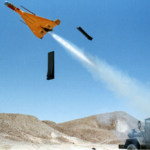
The Harpy kamikaze UAVs, manufactured by Israel Aerospace Industries (IAI) and which made their maiden flight in 1989, were designed as a key component of Israel’s air superiority. The system was actively used, particularly in the Israeli military’s operations in Syria and Lebanon, to destroy radar systems.
This system was incorporated into the inventory of the Turkish Air Force in the late 1990s under defense agreements with Israel. In addition, countries such as India, China, Chile and South Korea have adopted this system in large numbers.
When examining the technological origins of the kamikaze UAVs now prevalent in modern combat, a clear evolutionary process is evident, beginning with the DAR project and maturing with the Harpy. This process will continue with Iran’s Shahed-136.
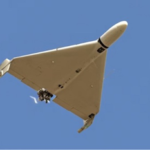
Iran’s UAV program dates back to the Iran-Iraq War. During this period, Iran developed simple UAV platforms for reconnaissance and target acquisition missions. International sanctions, technological embargoes and the doctrine of asymmetric warfare have shaped Iran’s unmanned systems development program since the 1990s. This situation has led Iran to adopt a strategy of domestic production and reverse engineering.
Lacking a modern air force, Iran has heavily relied on reverse-engineering foreign technologies, particularly in the field of unmanned systems. One of the most well-known examples of this process is the US-made RQ-170 Sentinel reconnaissance UAV captured in 2011. This incident played a significant role in Iran’s rapid advancement in UAV technology. In particular, the Shahed series of kamikaze UAVs has garnered attention in global defense literature.
The “loitering munition” concept introduced by the Harpy has formed the foundation of Iran’s Shahed program. There are some design similarities between the two systems, such as delta wings, propeller configurations and container-based launch systems. From an operational doctrine perspective, while the Harpy was designed for the mission of suppressing radar systems, the Shahed-136 has been adapted for attacking long-range strategic targets. Therefore, the system can be considered a modified version of the Harpy concept tailored for a different operational role.
The Shahed-136 system developed by Iran has secured a significant place in modern warfare due to its low cost and attack capability with a range of over 2,000 km.
The Russia-Ukraine War has been one of the most significant examples illustrating the transformation and strategic impact that kamikaze UAVs have created on the battlefield. In the Russia-Ukraine War, Iranian-made Shahed (Shahed-136/131) kamikaze UAVs are being extensively used by Russia to target Ukraine’s energy infrastructure and cities. These UAVs have become a key element of the attrition warfare strategy by straining Ukraine’s air defense.
The constant threat of sudden kamikaze drone attacks has created significant psychological pressure on frontline troops. In particular, the drones’ low radar visibility makes it easier for them to penetrate enemy defense systems, which has sparked serious concern and a defensive reflex not only in the military but also in civilian areas.
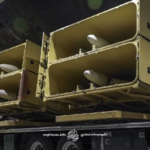
One of the biggest advantages of these systems is their low production costs. The cost of the air defense systems used to neutralize the Iranian-made Shahed-136’s, which cost $20,000 each, runs into the millions of dollars. This cost has made UAVs an attractive weapon for both major military powers and smaller states.
On the other hand, defending against kamikaze UAVs poses a significant challenge for modern air defense systems. These UAVs are generally difficult to detect due to their small size, low speed and low radar signature. Additionally, their ability to launch attacks in large numbers reduces the effectiveness of defense systems. Electronic warfare systems and air defense missiles are extensively used against such attacks; however, the imbalance between the cost and effectiveness of these systems highlights the need to develop new defense strategies. In addition to the impact it created during the Russia-Ukraine War, particularly following the recent US and Israeli attacks on Iran, kamikaze UAVs, primarily the Shahed family, used by Iran in its counterattacks targeted US bases established in the region and Gulf countries, and despite advanced air defense systems like Patriot and THAAD, have demonstrated the ability to destroy strategically valuable command centers, AN/TPY-2 radars, and communication systems.
Furthermore, beyond their physical effects, these systems have a powerful psychological impact on enemy forces and the civilian population. The Russia-Ukraine War has demonstrated that UAVs can be used not only in military operations but also as a psychological weapon. Iran’s attacks on Gulf countries, which serve as major tourism hubs, have caused significant chaos and panic in those nations. Attacks targeting airports and energy infrastructure have exerted immense psychological pressure on both the local population and visitors. In particular, the massive collapse in the real estate sector has dealt a severe blow to these countries’ economies.
Turkish Defense Industry Kamikaze UAV Family
Since the mid-2010s, Türkiye has achieved a significant technological leap in the field of unmanned systems, and public and private sector organizations within the defense industry ecosystem have developed unique platforms, particularly in the area of tactical mini-kamikaze UAV systems. These systems are currently in operational use by the Turkish Armed Forces and security units and are also achieving export success in the international market.
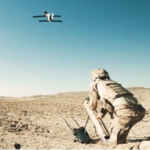
The family of tactical mini-UAVs developed by STM in Türkiye includes kamikaze UAV and reconnaissance UAV platforms. It consists of three main systems: KARGU (a rotary-wing kamikaze UAV), ALPAGU (a fixed-wing kamikaze UAV), and TOGAN (a reconnaissance and surveillance UAV).
The Turkish defense industry has not only developed kamikaze UAV platforms but has also conducted research on artificial intelligence and swarm algorithms. Capabilities such as autonomous target detection, target classification via image processing, obstacle recognition and avoidance, mission execution in swarms, interoperability between platforms via a common ground control station and navigation in electronic jamming environments have been developed.
The KARGU and ALPAGU systems have been exported to numerous countries across different continents, enhancing the Turkish defense industry’s competitive strength in the global market. This has positioned Türkiye as a key player among global manufacturers in kamikaze UAV technology, alongside countries such as Israel, the USA and China.
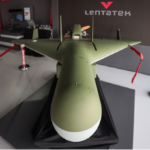
Kargı: The Turkish Armed Forces, which closely monitors developments in the field of military technology worldwide, launched the KARGI project in collaboration with ASELSAN, TÜBİTAK SAGE and TEI, with Lentatek as the prime contractor, to address the need for a more modern system to replace the Harpy kamikaze UAV systems procured from Israel in the late 1990s. In addition to Kargı’s RF seeker head and warhead system, its subsystems including the flight engine, launch motor (rocket motor), link system, propeller and fuel tank were also developed entirely domestically. The first successful flight of the system developed under the project was conducted in 2018.
Featuring many firsts for the Turkish defense industry, KARGI has the capability to suppress and destroy enemy radars within integrated air defense systems and enemy surface-to-air weapon systems. Meanwhile, its electro-optical sensor variant can carry out attacks on targets such as military bases, armored vehicles, and command centers.
Alpagut: The ALPAGUT, a new-generation long-range loitering munition system developed by STM and ROKETSAN, stands out particularly for its high-precision strike capability. The ALPAGUT system was first unveiled in 2022. Currently undergoing testing, the ALPAGUT system can carry various types of warheads and be deployed against different target sets. With an operational range of 60 km, an airborne endurance of over 60 minutes and day and night operational capability, the ALPAGUT is expected to serve as an effective force against both mobile and stationary land and sea targets.
Eren: Another new solution from the Turkish defense industry is the High-Speed Multi-Purpose Looping Munition (EREN), developed by Roketsan and currently undergoing testing. Launched from UAVs, helicopters, ground vehicles, ground-based systems and naval platforms, it is designed to neutralize low-speed threats, primarily kamikaze UAVs like the Shahed 136 and HARPY/HAROP, which can reach speeds of up to Mach 0.4. In addition, EREN which can be used against armored and unarmored ground targets as well as for anti-personnel purposes is equipped with a GPS-aided Inertial Navigation System (INS) and an IIR seeker head. With its guidance capabilities, long endurance and range of over 100 km, it will address a significant need in this field. EREN, which has undergone firing tests with the Bayraktar AKINCI, is scheduled to enter serial production this year.
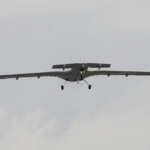
K2 Kamikaze UAV: Developed by Baykar, it is equipped with advanced artificial intelligence and autonomy algorithms. The system is designed to operate in electronic warfare environments where global navigation satellite systems (GNSS) are unavailable or subject to heavy jamming. The platform can estimate its position by visually scanning the terrain using a gimbal camera and a night-vision camera system mounted beneath the fuselage. This enables the K2 Kamikaze UAV to navigate continuously using its visual scanning capabilities and autonomously proceed to its target even in environments where GNSS signals are completely absent. The EO/IR gimbal camera system on board provides the platform with both reconnaissance and surveillance capabilities, as well as the ability to accurately lock onto and strike the target. The platform also possesses coordinate-based precision strike capability. As the largest kamikaze platform in its class, the K2 Kamikaze UAV provides flexibility in the field with its short-runway takeoff and landing capability.
With a maximum takeoff weight of 800 kilograms, the platform distinguishes itself from its counterparts by being capable of carrying 200-kilogram warhead munitions that deliver high destructive power. A range of over 2,000 km, a speed of over 200 km/h, and an endurance of over 13 hours enable the platform to carry out long-range strategic missions.
TOYCA 05: Developed by SkyDagger, the TOYCA 05 kamikaze UAV will perform missions with features such as a 70 km range, a 5 kg high-explosive warhead, mesh swarm communication, anti-jamming protection and FPV or fully autonomous flight. SkyDagger has an annual production capacity of over 30,000 fixed-wing UAVs.
Conclusion
Kamikaze UAV systems have become one of the most critical elements of modern warfare. Türkiye has demonstrated rapid development in this field over the past decade, both technologically and operationally. STM’s KARGU and ALPAGU systems, Roketsan’s ALPAGUT munitions, Baykar’s new-generation loitering munition concepts and new initiatives like Skydagger demonstrate Türkiye’s technological capabilities in this field. The Turkish kamikaze UAV ecosystem is not limited to these alone. Many mid-sized firms are developing systems tailored to various operational concepts.
In the future, AI-enabled swarm systems, high-speed loitering munitions, and multi-platform usage concepts will enable Türkiye to reach even higher levels in kamikaze UAV technologies. These developments will also strengthen Türkiye’s position in the global defense industry within the field of unmanned combat systems.
This article was first published on the Türkiye Research Foundation’s Website on March 19, 2026.