It is said that when the Chinese wish to curse someone, they say, “May you live in interesting times.” Today, this curse seems to have come true on a global scale—but most of all for Europe. China’s rise and the response to it from the world’s superpower, the United States, are truly putting the world and humanity through “interesting times.” We see the effects of this tension clearly in the radical dismantling of Iran’s influence in the Middle East, Trump’s unprecedented and extraordinary intervention in Venezuela, his claims regarding the Panama Canal and his calls for Canada to “become a state”. However, it would not be an exaggeration to say that the most striking reflection of these interesting times is seen in transatlantic relations, for Trump has taken a series of steps in his second term that will create a major geopolitical shockwave in transatlantic relations.
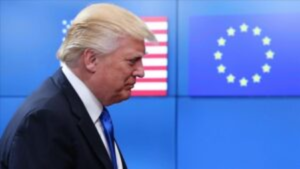
The USA statements suggesting that security guarantees are no longer certain have sparked the greatest security crisis in Europe since World War II. Beyond that, Trump’s explicit eyeing of Greenland—a territory belonging to Denmark, a NATO and EU member—and his call for its annexation have made the shifting world order undeniably visible from Europe’s perspective. One can see it coming from a mile away. Europe has experienced successive geopolitical shocks over the past decade and, due to its own internal inertia and strategic blindness, has only begun to awaken from its deep slumber in the wake of these upheavals. The first geopolitical shock was Russia’s 2014 annexation of Crimea. Europeans believed they could manage this challenge using old methods and with USA support, wear Russia down in Ukraine. The second shock was Russia’s 2022 attack targeting Kyiv and spreading the war across all of Ukraine. Europe, particularly Germany, was practically dragged into this war by the Biden administration and irrevocably severed its energy and trade ties with Russia. The third shock was Trump’s rise to power, which shook transatlantic relations to their foundations. By overturning USA policy toward Ukraine, Trump threatened to leave Europe—which had been dragged into the war by the USA—alone to face Russia. The fourth geopolitical shock was Trump’s annexation demand directed at Denmark regarding Greenland; this demand demonstrated to Europeans, in a way that leaves no room for debate, that a new world order had been established. All these events have made it clear that Europe can no longer outsource its security to the USA, cannot place unconditional trust in Washington and must stand on its own two feet.
For this reason, Europe must radically redefine its economic, diplomatic and geostrategic priorities. It is at this point that the E3 core—comprising France, Germany and the United Kingdom—began to emerge as a tool for defense cooperation. This format, once used for the Iran nuclear deal, is now being employed to ensure European security with the mission of counterbalancing Russia and rebuilding European defense.
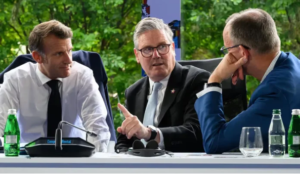
E3 is not yet an alternative structure to NATO. Rather, it operates more like a strong European pillar within NATO. While France and the United Kingdom serve as the “sword” of this core with their nuclear deterrence and strategic planning capabilities, Germany appears poised to ensure the “sustainability of the war” through its industrial, logistical and financial scale. The backbone supporting this core consists of three bilateral defense partnerships. The first is the France–United Kingdom partnership. Through the Lancaster House 2.0 defense and security cooperation agreement, the two countries have deepened their nuclear deterrence and joint force doctrine, thereby initiating a discussion on a Europe-based guarantee for Ukraine’s security. The second is the Trinity House Agreement signed between the United Kingdom and Germany. This agreement aims to scale up European defense capabilities across a wide range of areas, from air defense and munitions to cyber, space, and logistics. The third is the France–Germany axis. Through the “Franco-German Reset,” the will to produce Europe’s own weapons systems is being institutionalized via projects like FCAS and MGCS. Beyond this, joint deployment plans are being made in the Baltic and Eastern Europe.
However, the political will of the E3 alone is not sufficient. Deterrence is now measured not by rhetoric but by production. This is why Europe seeks to transition to a war economy through the SAFE program. Within this framework, ammunition, air defense systems, long-range missiles, UAVs, and joint procurement mechanisms will be produced within Europe—collectively and rapidly. All these transformations in Europe’s security architecture are placing Türkiye directly at the center. Having established a robust defense industry infrastructure over the past 20 years, Türkiye possesses the production capacity to fill Europe’s largest gap in the production of UAVs, ammunition and land and sea platforms.
Consequently, Türkiye has become an indispensable actor for European security due to its role within NATO, its strategic position on the southern flank and its defense industry capacity. For this reason, Türkiye’s integration into this emerging new security architecture among the United Kingdom, France and Germany is no longer a matter of choice but a necessity. In the coming period, with the inclusion of Italy and Spain alongside Türkiye in this core group, the emergence of a strong defense industry and security cooperation mechanism in Europe will no longer be a mere vision but the natural outcome of the new geopolitical balance taking shape.
This article was first published on the Türkiye Research Foundation’s Website on January 1, 2026.