Introduction
With the successes achieved in the last 10 years, Türkiye’s foreign policy has gained a depth that extends beyond its geographical borders to critical geopolitical regions. The acquisition of a strategic partnership by Libya and Somalia with Ankara in the diplomatic, economic, and military spheres stands out as one of the most striking examples. We are witnessing a progressive increase in the geostrategic significance of the Eastern Mediterranean, a key component of Türkiye’s foreign policy agenda; consequently, Ankara’s new initiative concerning Libya is highlighted as a current manifestation of the “Blue Homeland” (Mavi Vatan) doctrine. The ongoing engagements with various political and military actors in Libya should be interpreted not merely as a revitalization of bilateral relations but also as an endeavor to solidify Türkiye’s regional energy and security strategy.
This document explores the significance of Türkiye’s relations, developed through Bneghazi and Somalia, concerning the maritime jurisdiction agreement and energy security in the Eastern Mediterranean. The analysis clearly demonstrates why Türkiye has centered its focus on maritime jurisdiction areas and energy security in Libya while concentrating on energy cooperation, military training, academic education, and modernization and the development of state governance systems in Somalia. Accordingly, this document will analyze Türkiye’s strategy to protect its rights and establish its security within the ‘’Blue Homeland’’ (Mavi Vatan) against regional and global actors by employing a balance blend of ‘’soft power’’ and ‘’hard power’’ elements in these two critical geographies.
Libya’s Policy: A Geopolitics and Security Focused Balancing Element
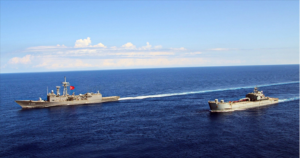
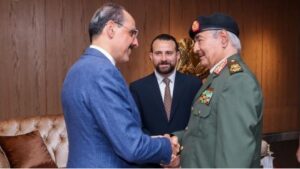
Muammar Gaddafi, during his leadership in Libya, remains in memory for advocating for greater unity among Muslim countries while simultaneously criticizing the expansionist and maximalist actions of the West and other imperialist powers. These statements accelerated Gaddafi’s overthrow in Libya. The internal turmoil that began in Libya gained momentum with the support of France, Italy, and the US, and the process evolved dramatically after French fighter jets first bombed Gaddafi’s forces. During the process of Gaddafi’s overthrow in 2011, armed groups, primarily including the UAE and Egyptian–backed Khalifa Haftar militias, along with opposition and separatist tribal groups inside Libya, launched attacks against Libyan army and security forces, achieving significant progress. During this process, Türkiye became involved as the most critical actor to shift the balance on the ground in Libya, following an invitation from the UN-recognized legitimate Government of National Accord (GNA). Specifically in 2019, Türkiye signed the Memorandum of Understanding on Security and Military Cooperation with the GNA and made significant contributions – primarily through staff, intelligence, and UAV/SİHA (armed/unarmed drone) support – to the liberation of the besieged city of Tripoli from Haftar’s forces. Parallel to this, Türkiye stood by the friendly and brotherly people of Libya, by the humanitarian needs arising from supply chains destroyed by the war; this was achieved through ‘aid ship’ organizations via TİKA, the Turkish Red Crescent (Kızılay), and AFAD, providing essential food and health materials. Currently, Türkiye continues to cultivate close relations with both the Tripoli government and Haftar, sustaining its military, economic, and diplomatic efforts aimed at helping Libya recover and achieve a more secure and peaceful state. The Memorandum of Understanding concerning the delimitation of maritime jurisdiction areas, signed with the Libyan GNA in 2019, is significant for protecting the rights and interests of Türkiye and Libya in the Mediterranean. It is beneficial to evaluate the relationship between Türkiye and Libya in terms of geopolitical dimension, security and military cooperation, and economic interests.
- Geopolitical Dimension: The maritime jurisdiction agreement is a critical step that supports Türkiye’s Exclusive Economic Zone (EEZ) claims in the Eastern Mediterranean and strengthens its voice regarding hydrocarbon resources in the region. This agreement is intended to counterbalance the maximalist EEZ claims of Greece and the Greek Cypriot Administration (GCA) and is viewed as an extension of Türkiye’s ‘’Blue Homeland’’ (Mavi Vatan) doctrine.
- Security and Military Cooperation: Türkiye played a significant role in halting the advance of the Libyan National Army (LNA) forces, led by Khalifa Haftar, toward Tripoli by providing military training, consultancy, and logistical support to the GNA/GNU (Government of National Accord/Unity). This support aims to pave the way for a political solution in Libya, secure Türkiye’s long-term strategic interests in the region (maritime jurisdiction areas, energy exploration rights), and preserve the deep-rooted ties between Türkiye and Libya.
- Economic Interests: New investment opportunities for Turkish companies in Libya can be considered one of the significant economic motivations for Türkiye’s support of a stable Libyan government.
Türkiye’s Libya policy has been marked by tensions, particularly due to its diverging positions with regional and global actors in the Eastern Mediterranean (such as Egypt, the UAE, France, Italy, the US, and Russia); however, diplomatic normalization efforts have recently come to the fore. Ankara’s multi-dimensional engagement with Libya is paving the way for potential energy agreements and joint exploration activities. Within this framework, Libya is regarded not only as an energy supplying country but also as a partner that expands Türkiye’s diplomatic maneuvering space in the Eastern Mediterranean. Türkiye’s energy security goal is directly linked to its strategy of diversification, aiming to reduce its dependence on energy suppliers like Russia and Iran.
Activities in Somalia: Soft Power State-Building
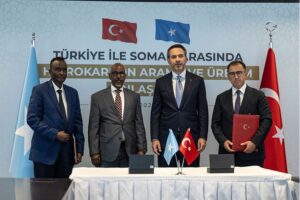
In the period starting with President Recep Tayyip Erdoğan’s historic visit in 2011 and extending to Somali President Hassan Sheikh Mohamud’s visit to Türkiye in 2025, Türkiye has stood by Somalia, which has been struggling with chronic famine crises and food, health, and security issues created by domestically and externally supported terrorist organizations, primarily Al-Shabaab and ISIS. Against the terrorist threat that undermines Somalia’s military and political authority and prevents the delivery of humanitarian aid, Türkiye enhanced its hard power capacity by training key units that form the backbone of the Somali army at TURKSON, its largest military base established in the capital Mogadishu. Furthermore, by signing the Framework Agreement on Defense and Economic Cooperation in 2024, Türkiye effectively undertook the security of Somali territorial waters. In addition, through institutions such as TİKA, the Turkish Red Crescent (Kızılay), and AFAD, Türkiye continues its support and efforts toward the improvement of Somalia in the fields of health, food, and local governance. Türkiye is also conducting hydrocarbon exploration activities on behalf of Somalia off the Somali coast with the Oruç Reis vessel and ensuring the security of Somali territorial waters with the Turkish Navy.
By undertaking a mediation role between Somalia and Ethiopia during their recent tension, Türkiye has transformed its support from a purely aid-based dimension into a regional energy and security partnership. Considering these developments, Türkiye is demonstrating a strategic posture for several reasons: its opening to the ocean, its capacity to conduct long-range missile tests, its future potential to launch rockets into space, and its ability to establish security for both military and civilian trade routes. The Türkiye-Somalia relationship is explained in greater detail in the points provided below.
- Humanitarian and Development Aid: Türkiye has provided comprehensive humanitarian and development support to Somalia through TİKA (Turkish Cooperation and Coordination Agency), the Turkish Red Crescent (Kızılay), and NGOs. This support encompasses infrastructure development (Mogadishu Airport, ports), health, education (scholarships), and direct budget support.
- Security and State-Building: Türkiye has undertaken a critical role in the construction and training of Somalia’s national army. The Turkish Task Force Command in Mogadishu stands as one of the largest military training bases established by a foreign country; it provides significant support to the Somali army in its fight against terrorist organizations. By offering training to Somali soldiers in military schools and barracks in Türkiye, it intends to transfer Turkish military intellect and experience to the friendly and allied Somali state.
- Strategic Maritime Cooperation: The recently signed defense and economic cooperation agreement between Türkiye and Somalia stipulates that Türkiye will secure Somali territorial waters for a period of 10 years. While this agreement aids in combating piracy and protecting maritime resources, it also offers Türkiye potential economic opportunities, such as the right to search for and extract oil and natural gas in the region.
Türkiye’s Blue Homeland (Mavi Vatan) Vision
Türkiye’s activities in Libya and Somalia demonstrate Ankara’s growing strategic depth in its foreign policy and its aspiration to become a regional actor. In both countries, Türkiye has adopted a comprehensive approach that includes military cooperation and strategic economic agreements, in addition to traditional diplomatic and humanitarian aid instruments. While humanitarian aid and state-building (soft power) have been prominent in Somalia, military support (hard power) has served as a critical balancing factor for protecting geopolitical interests in Libya. These engagements have enhanced Türkiye’s regional and global visibility, positioning it as an important actor in conflict prevention and resolution in the Horn of Africa and the Eastern Mediterranean.
In conclusion, while Türkiye’s policy in Libya centers on its geopolitical rights, such as maritime jurisdiction areas and energy security in the Eastern Mediterranean, its engagement in Somalia reflects the goal of establishing a regional partnership through humanitarian development, state-building, and long-term military cooperation. This active role in two distinct geographies underscores the flexibility and strategic depth of Türkiye’s foreign policy. Indeed, the security of the Blue Homeland (Mavi Vatan) begins in Somalia, as the primary route extending from south to north is the Eastern Mediterranean. Therefore, Türkiye’s presence in this region is a clear demonstration of the Mavi Vatan doctrine.
The “Framework Agreement on Defense and Economic Cooperation,” signed in February 2024, stands out as a milestone in the established relations. In this context, the “Hydrocarbon Exploration and Production Agreement” signed between Türkiye and Somalia under the Framework Agreement serves as proof of the deepening of the relations between the two countries. The agreement covers Türkiye’s exploration, evaluation, development, and production of oil and natural gas resources in Somalia. This cooperation not only strengthens Türkiye’s strategic position on the African continent but also enhances Somalia’s potential for achieving economic independence and stability.
Türkiye’s presence in Somalia constitutes an important point of reference for increasing its strategic influence in Africa. This agreement enables Türkiye to expand its influence in Africa, in line with its regional stability objective, and to diversify its sources to ensure energy security. This process is directly connected to Türkiye’s goal of becoming an indispensable actor in both regional security and energy geopolitics. In this context, Türkiye will continue its struggle for rights in its maritime domains.
This article was first published on the Türkiye Research Foundation’s Turkish website on November 17, 2025.